
Kambo: Why the relief runs out at two or three weeks

Kambo: The Nervous System Angle

Why the relief runs out at two or three weeks

Originally published March 22, 2024. Revised.

I get more questions about kambo than almost anything else, and I’ve had a lot of experience with it. It took me years to form a position, and I hold it loosely. This one requires some background, because the useful part of the argument sits underneath the usual conversation about whether kambo works.

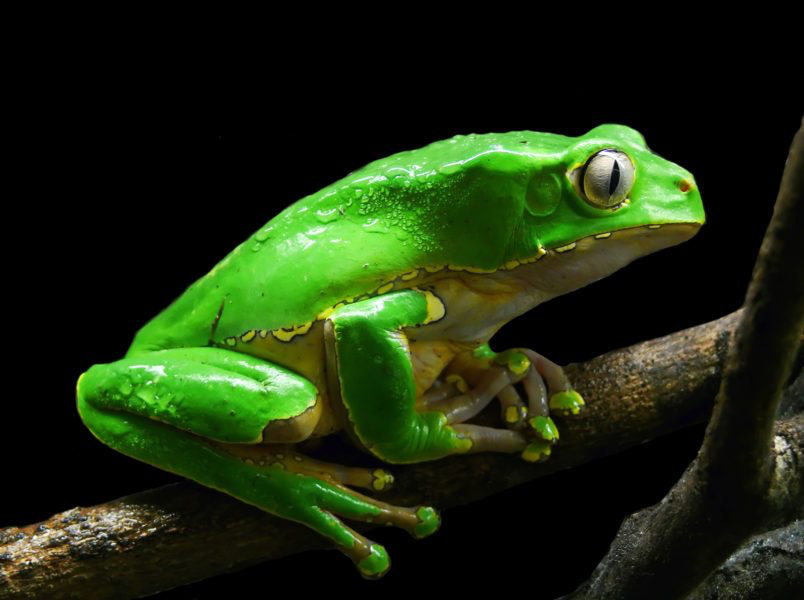
Kambo, also called sapo, comes from the secretion of the giant leaf frog, Phyllomedusa bicolor. It has roots in the traditions of several Amazonian peoples including the Matsés, Kanamari and Kaxinawá of Brazil and Peru, where illness is understood as an imbalance in relationship with the natural and ancestral worlds, and kambo functions as a rebalancing medicine that clears what obstructs vitality. Healers harvest it ceremonially, with prayer and gratitude to the frog.

The administration varies by lineage, but the shape is consistent. The recipient usually fasts for twelve hours or more. After opening prayers and clearing of the space, they drink two to four liters of water, typically within about fifteen minutes, sometimes before the application and sometimes after. The practitioner uses a smoldering stick of bamboo, incense or palo santo to make small superficial burns, called gates, and lifts off the outer layer to expose the porous skin beneath. Secretion that has been dried on a wooden stick is scraped off, mixed with water, and placed on the gates. Within moments the heart rate climbs. Nausea, sweating, chills, facial swelling and headache follow, usually peaking somewhere between ten and thirty minutes, and usually easing after the purge, though sometimes no purge comes. Songs, smoke or rapé may be used to help things move. Afterward the person rests, the medicine is removed, and dragon’s blood resin is applied to close the gates.

For many people the following day brings sharper focus, more confidence, and less symptom burden than before. Kambo is also used as preparation for other ceremonies, and a purge beforehand often makes an ayahuasca ceremony more visionary and less punishing.

What’s actually in it

The secretion is a mixture of peptides, and each one has a receptor target that tells you something about what the experience is doing.

Phyllocaerulein acts on cholecystokinin receptors, which is where much of the nausea, vomiting and gallbladder activity comes from. Phyllomedusin is a tachykinin acting at NK1 receptors, producing vasodilation, increased vascular permeability, salivation and gut contraction. Phyllokinin is bradykinin-related and is a potent vasodilator that also increases vascular permeability. Dermorphin and dermenkephalin are mu-opioid agonists and deltorphin is a delta-opioid agonist, and their main documented action is analgesia rather than immune modulation. There are also antimicrobial peptides including the dermaseptins.

The one that matters most for this discussion tends to get left off the list. Sauvagine is a member of the corticotropin-releasing factor family, the same family as the CRF your own hypothalamus uses to run the stress axis. Sauvagine binds CRF receptors, drives ACTH release from the pituitary, and therefore drives cortisol release from your adrenal glands. It also produces a long-lasting drop in blood pressure with tachycardia, and notably that hypotension isn’t blocked by atropine or propranolol, which means it isn’t being produced through the autonomic nervous system at all.

That last detail is worth sitting with, because it changes how the whole experience should be described. Kambo is usually called a sympathetic stimulant. The racing heart makes that intuitive. But the blood pressure goes down rather than up, driven by bradykinin and tachykinin vasodilation, and much of the tachycardia is a reflex response to that drop plus a direct CRF effect. The opioid peptides are not sympathomimetic either. What kambo actually produces is a massive, brief activation of the stress endocrine axis, sitting on top of profound vasodilation and violent gut activity.

The water is the dangerous part

Before going further, the protocol needs a warning attached to it, because the medicine is not where most of the documented harm comes from.

Two to four liters of water consumed in fifteen minutes, followed by heavy vomiting and often diarrhea, and combined with peptide-driven disruption of antidiuretic hormone, is a reliable recipe for dilutional hyponatremia. Sodium goes out in the vomit while free water can’t be cleared, blood sodium falls, and the brain swells. The published case reports include seizures, rhabdomyolysis, psychosis, toxic hepatitis, sudden cardiac death, esophageal rupture from repeated vomiting, and at least one case of brain death in a woman who deteriorated within hours of a ceremony. Several of the severe cases involved six liters of water.

Most ceremonies pass without this. An observational series of 241 rituals across 147 people recorded facial swelling in about seventy percent, sweating in about half, bowel movement in just under half, and fainting in about one in ten, with no severe adverse events in that sample. So the base rate of catastrophe is low. But the water loading is the one part of the modern protocol with a clear mechanism for killing someone, and it is treated as an unremarkable step almost everywhere. If you take kambo, that is the part to ask about.

Reading it through the healing phase

To make sense of the pattern I keep seeing, I want to use the framework of German New Medicine, developed by Dr. Ryke Geerd Hamer, which proposes that disease originates in an unexpected biological conflict shock registering across psyche, brain and organ.

In that model, a conflict shock puts the body into the conflict active phase, with raised heart rate and blood pressure, stress hormones circulating, and tissue adaptations underway. Symptoms are usually absent here, because the organism is occupied with adapting rather than repairing. Once the conflict resolves, the body moves into the healing phase, a prolonged vagotonia in which the adaptations are undone and symptoms appear. What our culture reads as being sick, this model reads as the repair itself. The intensity and duration of the symptoms track the severity and length of the conflict that preceded them.

Applied to chronic conditions like ME/CFS and Lyme, this framework suggests prolonged parasympathetic dominance: a healing phase that is stalled or repeatedly restarted, possibly by recurring conflicts, and in my experience complicated by mineral imbalance and undernourishment.

Now put kambo next to a glucocorticoid. Steroids relieve symptoms by suppressing the inflammatory activity that constitutes the repair, which is why symptoms return when the course ends and why nothing underneath has changed. Through this lens they interrupt the healing phase rather than completing it.

Kambo does something remarkably similar, and by a more direct route than I once would have described. It doesn’t merely mimic a steroid. Sauvagine drives your own adrenal glands to release cortisol, so the ceremony is producing an endogenous surge of the same hormone class. CRF-family peptides also have direct anti-inflammatory and anti-edema activity in peripheral tissue. From a healing phase perspective, that is a substance that turns the repair down at exactly the point where the repair is what you’re feeling.

Which explains the pattern I see and which I have never seen anyone explain otherwise.

The two to three week window

Kambo is spoken about as a cure for Lyme, for chronic fatigue, for a long list of things. I have yet to watch anyone actually cure themselves of these dynamics with kambo. What I see instead, consistently, is remission lasting roughly two to three weeks, after which the symptoms come back essentially as they were.

That timeline is the tell. A genuine resolution doesn’t expire on a schedule. A suppression does. Symptoms quiet down, energy comes up, elimination improves, and then the endocrine push fades, the body returns to what it was doing, and the picture reassembles itself.

The trouble is what that does to a person. Relief that reliably runs out on a two week clock produces a return visit. I’ve watched people move from occasional kambo to monthly kambo to something closer to a dependency, chasing a window that keeps closing, while the thing underneath never gets addressed. If the body does its repair work in the parasympathetic state, then every ceremony that pulls it out of that state is another interruption, and a person can spend years interrupting.

I’d hold that as a caution rather than a verdict, particularly for anyone carrying a chronic illness of the stalled-healing kind. There is also an aspect of kambo as a purgative that may genuinely help resolve an active conflict for some people in some circumstances. The physical act of purging can be therapeutic in its own right. That’s individual and context dependent, and blanket statements don’t survive contact with it.

The modern scene

Kambo reached Europe in the 1980s and has since spread worldwide. The slow ritual guided by an elder who knew the person has diverged a long way from what typically happens now.

Most of the kambo circulating globally comes from frogs harvested commercially in Brazil, without formal stewardship, and the Matsés are among the significant exporters. Whether global demand is creating unsustainable collection pressure is a live question, and it isn’t unique to kambo. It follows almost everything coming out of the Amazon basin once the West wants it.

On the practitioner side, a great many people now offer kambo in Western countries with no ongoing relationship to a tribe, no access to generational knowledge, and nobody supervising them. The International Association of Kambo Practitioners was set up to address this, with standards covering clean working conditions, frog testing, sitting procedures, emergency training and screening for contraindications. Those are the right things to have standards about. But the IAKP has no power to enforce anything on its own members. I have personally watched IAKP practitioners break IAKP rules. As an organization run by practitioners, which also trains practitioners and supplies them with medicine, it functions more as a trade body than as oversight.

Where I land

Kambo is complicated and this piece only addresses one question: whether it cures anything or provides temporary relief.

I have not seen it cure anyone of anything, and I don’t think the cure framing holds. When healing happens it is the body doing it. Some practices support that process and some switch it off, and kambo appears to do a bit of both, which is why working with it well probably means understanding what it does to the nervous and endocrine systems rather than treating it as a purge that fixes things.

If you are going to take it, take the water seriously, work with someone who screens properly and knows what a deteriorating person looks like, and notice honestly whether you are returning because something resolved or because the window closed again.


References

Silva, F. V. A., et al. (2020). Kambô: an Amazonian enigma. Journal of Venom Research, 10, 13-17.

Erspamer, V., Erspamer, G. F., Improta, G., et al. (1980). Sauvagine, a new polypeptide from Phyllomedusa sauvagei skin: occurrence in various Phyllomedusa species and pharmacological actions on rat blood pressure and diuresis. Naunyn-Schmiedeberg’s Archives of Pharmacology, 312(3), 265-270.

Leban, V., Kozelj, G., & Brvar, M. (2016). The syndrome of inappropriate antidiuretic hormone secretion after giant leaf frog (Phyllomedusa bicolor) venom exposure. Toxicon, 120, 107-109.

Shamanic Kambô frog hyponatremic toxicity leading to brain death: a case report. (2025). Cureus, 17(5), e83963.

Pogorzelska, J., & Tapiński, T. W. (2017). Toxic hepatitis caused by the excretions of the Phyllomedusa bicolor frog. Clinical and Experimental Hepatology, 3(1), 33-34.

Use of Phyllomedusa bicolor secretion during kambô ritual: observational responses, dosage, and risk of adverse events. (2021). Journal of Concurrent Disorders.
Share This Post

Kambo: Why the relief runs out at two or three weeks

Kambo: The Nervous System Angle

Why the relief runs out at two or three weeks

Originally published March 22, 2024. Revised.

I get more questions about kambo than almost anything else, and I’ve had a lot of experience with it. It took me years to form a position, and I hold it loosely. This one requires some background, because the useful part of the argument sits underneath the usual conversation about whether kambo works.

Kambo, also called sapo, comes from the secretion of the giant leaf frog, Phyllomedusa bicolor. It has roots in the traditions of several Amazonian peoples including the Matsés, Kanamari and Kaxinawá of Brazil and Peru, where illness is understood as an imbalance in relationship with the natural and ancestral worlds, and kambo functions as a rebalancing medicine that clears what obstructs vitality. Healers harvest it ceremonially, with prayer and gratitude to the frog.

The administration varies by lineage, but the shape is consistent. The recipient usually fasts for twelve hours or more. After opening prayers and clearing of the space, they drink two to four liters of water, typically within about fifteen minutes, sometimes before the application and sometimes after. The practitioner uses a smoldering stick of bamboo, incense or palo santo to make small superficial burns, called gates, and lifts off the outer layer to expose the porous skin beneath. Secretion that has been dried on a wooden stick is scraped off, mixed with water, and placed on the gates. Within moments the heart rate climbs. Nausea, sweating, chills, facial swelling and headache follow, usually peaking somewhere between ten and thirty minutes, and usually easing after the purge, though sometimes no purge comes. Songs, smoke or rapé may be used to help things move. Afterward the person rests, the medicine is removed, and dragon’s blood resin is applied to close the gates.

For many people the following day brings sharper focus, more confidence, and less symptom burden than before. Kambo is also used as preparation for other ceremonies, and a purge beforehand often makes an ayahuasca ceremony more visionary and less punishing.

What’s actually in it

The secretion is a mixture of peptides, and each one has a receptor target that tells you something about what the experience is doing.

Phyllocaerulein acts on cholecystokinin receptors, which is where much of the nausea, vomiting and gallbladder activity comes from. Phyllomedusin is a tachykinin acting at NK1 receptors, producing vasodilation, increased vascular permeability, salivation and gut contraction. Phyllokinin is bradykinin-related and is a potent vasodilator that also increases vascular permeability. Dermorphin and dermenkephalin are mu-opioid agonists and deltorphin is a delta-opioid agonist, and their main documented action is analgesia rather than immune modulation. There are also antimicrobial peptides including the dermaseptins.

The one that matters most for this discussion tends to get left off the list. Sauvagine is a member of the corticotropin-releasing factor family, the same family as the CRF your own hypothalamus uses to run the stress axis. Sauvagine binds CRF receptors, drives ACTH release from the pituitary, and therefore drives cortisol release from your adrenal glands. It also produces a long-lasting drop in blood pressure with tachycardia, and notably that hypotension isn’t blocked by atropine or propranolol, which means it isn’t being produced through the autonomic nervous system at all.

That last detail is worth sitting with, because it changes how the whole experience should be described. Kambo is usually called a sympathetic stimulant. The racing heart makes that intuitive. But the blood pressure goes down rather than up, driven by bradykinin and tachykinin vasodilation, and much of the tachycardia is a reflex response to that drop plus a direct CRF effect. The opioid peptides are not sympathomimetic either. What kambo actually produces is a massive, brief activation of the stress endocrine axis, sitting on top of profound vasodilation and violent gut activity.

The water is the dangerous part

Before going further, the protocol needs a warning attached to it, because the medicine is not where most of the documented harm comes from.

Two to four liters of water consumed in fifteen minutes, followed by heavy vomiting and often diarrhea, and combined with peptide-driven disruption of antidiuretic hormone, is a reliable recipe for dilutional hyponatremia. Sodium goes out in the vomit while free water can’t be cleared, blood sodium falls, and the brain swells. The published case reports include seizures, rhabdomyolysis, psychosis, toxic hepatitis, sudden cardiac death, esophageal rupture from repeated vomiting, and at least one case of brain death in a woman who deteriorated within hours of a ceremony. Several of the severe cases involved six liters of water.

Most ceremonies pass without this. An observational series of 241 rituals across 147 people recorded facial swelling in about seventy percent, sweating in about half, bowel movement in just under half, and fainting in about one in ten, with no severe adverse events in that sample. So the base rate of catastrophe is low. But the water loading is the one part of the modern protocol with a clear mechanism for killing someone, and it is treated as an unremarkable step almost everywhere. If you take kambo, that is the part to ask about.

Reading it through the healing phase

To make sense of the pattern I keep seeing, I want to use the framework of German New Medicine, developed by Dr. Ryke Geerd Hamer, which proposes that disease originates in an unexpected biological conflict shock registering across psyche, brain and organ.

In that model, a conflict shock puts the body into the conflict active phase, with raised heart rate and blood pressure, stress hormones circulating, and tissue adaptations underway. Symptoms are usually absent here, because the organism is occupied with adapting rather than repairing. Once the conflict resolves, the body moves into the healing phase, a prolonged vagotonia in which the adaptations are undone and symptoms appear. What our culture reads as being sick, this model reads as the repair itself. The intensity and duration of the symptoms track the severity and length of the conflict that preceded them.

Applied to chronic conditions like ME/CFS and Lyme, this framework suggests prolonged parasympathetic dominance: a healing phase that is stalled or repeatedly restarted, possibly by recurring conflicts, and in my experience complicated by mineral imbalance and undernourishment.

Now put kambo next to a glucocorticoid. Steroids relieve symptoms by suppressing the inflammatory activity that constitutes the repair, which is why symptoms return when the course ends and why nothing underneath has changed. Through this lens they interrupt the healing phase rather than completing it.

Kambo does something remarkably similar, and by a more direct route than I once would have described. It doesn’t merely mimic a steroid. Sauvagine drives your own adrenal glands to release cortisol, so the ceremony is producing an endogenous surge of the same hormone class. CRF-family peptides also have direct anti-inflammatory and anti-edema activity in peripheral tissue. From a healing phase perspective, that is a substance that turns the repair down at exactly the point where the repair is what you’re feeling.

Which explains the pattern I see and which I have never seen anyone explain otherwise.

The two to three week window

Kambo is spoken about as a cure for Lyme, for chronic fatigue, for a long list of things. I have yet to watch anyone actually cure themselves of these dynamics with kambo. What I see instead, consistently, is remission lasting roughly two to three weeks, after which the symptoms come back essentially as they were.

That timeline is the tell. A genuine resolution doesn’t expire on a schedule. A suppression does. Symptoms quiet down, energy comes up, elimination improves, and then the endocrine push fades, the body returns to what it was doing, and the picture reassembles itself.

The trouble is what that does to a person. Relief that reliably runs out on a two week clock produces a return visit. I’ve watched people move from occasional kambo to monthly kambo to something closer to a dependency, chasing a window that keeps closing, while the thing underneath never gets addressed. If the body does its repair work in the parasympathetic state, then every ceremony that pulls it out of that state is another interruption, and a person can spend years interrupting.

I’d hold that as a caution rather than a verdict, particularly for anyone carrying a chronic illness of the stalled-healing kind. There is also an aspect of kambo as a purgative that may genuinely help resolve an active conflict for some people in some circumstances. The physical act of purging can be therapeutic in its own right. That’s individual and context dependent, and blanket statements don’t survive contact with it.

The modern scene

Kambo reached Europe in the 1980s and has since spread worldwide. The slow ritual guided by an elder who knew the person has diverged a long way from what typically happens now.

Most of the kambo circulating globally comes from frogs harvested commercially in Brazil, without formal stewardship, and the Matsés are among the significant exporters. Whether global demand is creating unsustainable collection pressure is a live question, and it isn’t unique to kambo. It follows almost everything coming out of the Amazon basin once the West wants it.

On the practitioner side, a great many people now offer kambo in Western countries with no ongoing relationship to a tribe, no access to generational knowledge, and nobody supervising them. The International Association of Kambo Practitioners was set up to address this, with standards covering clean working conditions, frog testing, sitting procedures, emergency training and screening for contraindications. Those are the right things to have standards about. But the IAKP has no power to enforce anything on its own members. I have personally watched IAKP practitioners break IAKP rules. As an organization run by practitioners, which also trains practitioners and supplies them with medicine, it functions more as a trade body than as oversight.

Where I land

Kambo is complicated and this piece only addresses one question: whether it cures anything or provides temporary relief.

I have not seen it cure anyone of anything, and I don’t think the cure framing holds. When healing happens it is the body doing it. Some practices support that process and some switch it off, and kambo appears to do a bit of both, which is why working with it well probably means understanding what it does to the nervous and endocrine systems rather than treating it as a purge that fixes things.

If you are going to take it, take the water seriously, work with someone who screens properly and knows what a deteriorating person looks like, and notice honestly whether you are returning because something resolved or because the window closed again.


References

Silva, F. V. A., et al. (2020). Kambô: an Amazonian enigma. Journal of Venom Research, 10, 13-17.

Erspamer, V., Erspamer, G. F., Improta, G., et al. (1980). Sauvagine, a new polypeptide from Phyllomedusa sauvagei skin: occurrence in various Phyllomedusa species and pharmacological actions on rat blood pressure and diuresis. Naunyn-Schmiedeberg’s Archives of Pharmacology, 312(3), 265-270.

Leban, V., Kozelj, G., & Brvar, M. (2016). The syndrome of inappropriate antidiuretic hormone secretion after giant leaf frog (Phyllomedusa bicolor) venom exposure. Toxicon, 120, 107-109.

Shamanic Kambô frog hyponatremic toxicity leading to brain death: a case report. (2025). Cureus, 17(5), e83963.

Pogorzelska, J., & Tapiński, T. W. (2017). Toxic hepatitis caused by the excretions of the Phyllomedusa bicolor frog. Clinical and Experimental Hepatology, 3(1), 33-34.

Use of Phyllomedusa bicolor secretion during kambô ritual: observational responses, dosage, and risk of adverse events. (2021). Journal of Concurrent Disorders.

Share This Post

More To Explore